P2P investing for beginners
P2P platforms provide access to loans or related products, but their legal structures differ: claims, Notes, asset-backed securities or crowdfunding loans. Potential returns come with credit, platform and liquidity risk, including the possibility of a partial or total loss.
Last updated:
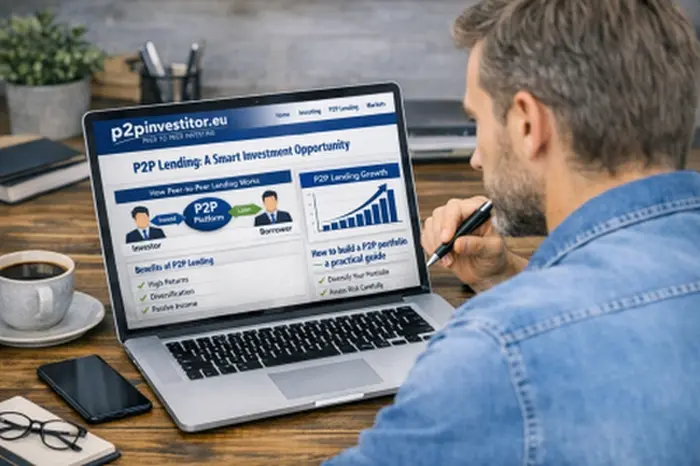
What should you know before your first investment?
A convenient interface does not make a product simple or low-risk. Before investing, understand terms such as buyback, credit rating, secondary market and Auto Invest, as well as which entity owes you money if something goes wrong.
P2P is a broad label, not a single financial product. Depending on the platform, you may acquire claims, Notes or other securities, fund crowdfunding loans or invest in asset-backed projects. Rights, regulation and protections differ between models.
Why do so many people start with a small amount?
Your starting amount should reflect your investor profile and risk tolerance and be small enough that losing it completely would not disrupt your personal budget. A small amount limits the size of a possible loss, but it does not remove risk.
Starting small gives you time to observe how payments work, how interest is credited, what happens after an arrear and how the automation tools behave.
Increasing exposure makes sense only after checking financial reports, the legal structure, liquidity and concentration by platform, lender and country—not simply after receiving a few regular payments.
What expectations are realistic?
There is no predictable profit schedule. Arrears, restructurings, lender or platform failure and a lack of secondary-market buyers can produce lower or negative real returns.
The advertised interest rate is not the final result. Loan losses, periods without interest, fees, taxes and inflation all matter. Past performance does not guarantee future results.
Realistic expectations from the beginning reduce the likelihood of disappointment when individual loans experience temporary fluctuations or delays.
What does a disciplined process look like?
There is no universal formula, and no practice guarantees profit. The following actions can reduce concentration and decisions made without enough information:
- set an advance limit for your total P2P allocation;
- set limits by platform, lender, country and loan type;
- check licences, contracts, financial reports and related parties;
- make a plan for arrears and limited liquidity;
- review periodically and record the reasons behind each decision.
Diversification may reduce the effect of a single problem, but it does not protect against a broad market shock or highly connected lenders and platforms.
First steps
Understand how P2P platforms work
Learn what you are buying, who owes you money, how payments flow and which protections apply to the specific legal model.
Read the step-by-step guideReview the main risks
Understand credit, platform, liquidity, legal, operational and currency risk before choosing a platform or activating Auto Invest.
Read the risk guideCompare platforms consistently
Compare returns together with liquidity, diversification, transparency, legal structure and the financial strength of the companies involved.
Compare platformsRisk and protection
Understand the limits of buyback
Buyback is a contractual obligation, not a bank or state guarantee. Its value depends on the company that promised it remaining able and willing to pay.
Read about buyback riskAvoid concentration
High interest rates, automation and a low minimum investment can hide product complexity. Set limits by platform, lender, group, country and loan type.
Open the risk checklistBuild a review routine
Monitor actual arrears, the source of buyback payments, company reports and links between entities. Diversification is not a guarantee against loss.
See the methodologyComparisons and context
P2P is not a bank deposit
P2P investments and bank deposits have different legal protection, liquidity and loss risk. P2P investments are generally not covered by a deposit-guarantee scheme.
Returns and inflation
A nominal interest rate may exceed inflation, but credit losses, taxes, fees and periods without payments can erase the real return. Buyback does not protect purchasing power.
- Compare results after losses, fees, taxes and inflation.
- Do not treat a short term or buyback as a guarantee.
- Do not rely on P2P alone as inflation protection.
Platform comparison
There is no universally “best” P2P platform. The choice depends on the legal model, risk, term and your need for liquidity.
- Define your acceptable loss and investment horizon.
- Compare licences, reports, arrears and terms.
- Check the exit mechanism and its limitations.
- Look for genuine, not merely formal, diversification.
Useful advice before you begin
Why is a strategy important?
Define your maximum allocation, time horizon, acceptable loss and the conditions under which you will stop making new investments. A plan does not guarantee returns, but it reduces decisions driven solely by a high advertised rate.
Why is diversification important?
Spreading exposure across lenders, countries and loan types may reduce the effect of one problem. Check whether exposures still depend on the same corporate group or economic risk. Diversification does not rule out an overall loss.
How should you assess risk?
Higher advertised returns usually mean higher risk. Verify licences in official registers, audited reports, contracts, arrears, related parties and the limits of protection mechanisms. Risk of loss remains even after due diligence.
Important risk warning
P2P investments are not bank deposits and are generally not protected by a deposit-guarantee scheme. Delays, illiquidity and a partial or total loss of capital are possible. Invest only money you can afford to lose.