1. Understand the model
Before investing, understand how the platform works, who receives the loan, how interest and principal are repaid, and what happens after an arrear. This is the basis for every later decision.
Beginner’s guideP2P investing provides access to loans or related financial products through online platforms. Depending on the legal structure, you may acquire a claim, a security or an interest in a crowdfunding loan. The potential interest comes with real credit, platform and liquidity risk.
If you are new to the subject, first identify your investor profile, decide what loss you could absorb and consider how long you could manage without access to the money. Starting with a limited amount can help you understand the process without assuming that the displayed return will be achieved.
Last updated:
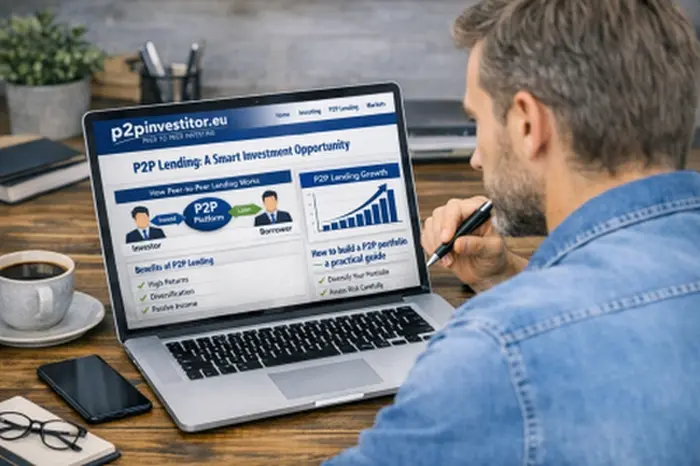
Before investing, understand how the platform works, who receives the loan, how interest and principal are repaid, and what happens after an arrear. This is the basis for every later decision.
Beginner’s guidePlatforms use different legal models, products and liquidity mechanisms. Compare regulation, lenders, contracts, the secondary market and risk rather than choosing solely by advertised returns.
View the comparisonYour first goal is to understand the process, not to maximise profit. If you decide to invest, use an amount whose partial or total loss you can afford.
Do not place everything in one loan, one platform or one country. Spreading capital is an important risk-management tool, although it cannot prevent every loss.
Track arrears, payments actually received, concentration and uninvested cash. A short observation period is not enough to assess performance across different market conditions.
Tax treatment depends on your country, tax status and the type of income received. Check the current rules in your jurisdiction and seek qualified tax advice when necessary.
One reason is the low entry threshold. Many platforms do not require a large amount of capital for a first investment, allowing investors to learn gradually and gain practical experience.
Another reason is accessibility. Registration, identity verification and account funding can usually be completed online.
Easy access does not mean low risk. P2P products are not bank deposits, are generally not protected by a deposit-guarantee scheme and can result in delays or loss of capital.
This type of investment does not necessarily require daily attention. After the initial setup, many investors spend limited time reviewing results, platform updates and active loans.
Automated tools can help execute predefined rules. They do not guarantee diversification, liquidity or lower risk and should be reviewed periodically.
Many people initially expect quick results. In reality, every strategy needs time before its actual performance becomes clearer.
Late payments and deviations from expectations are signals for review. Investigate the cause, the affected lender, contractual deadlines and the platform’s response instead of automatically assuming the problem is temporary.
A longer period provides more data, but past performance does not guarantee future payments. Assess returns, arrears, recoveries and changes in terms together.
Higher expected returns often come with a higher level of risk. Platforms or products offering significantly higher interest rates may be compensating investors for greater uncertainty, lower liquidity or a higher probability of delay and default.
When choosing a P2P platform, consider the whole picture. Two platforms may offer similar rates but differ substantially in regulation, transparency, borrower quality, investor-protection mechanisms and repayment history.
A sound assessment balances:
A lower advertised return does not automatically mean lower risk, and a higher return does not reveal the expected loss on its own. Compare rates with asset quality, concentration, liquidity and the ability of obligated parties to honour their contracts.
Define the key parameters in advance: the amount you are prepared to invest, the risk you can accept and the length of time you expect to use the platforms. Clear limits make it easier to track progress and assess results against your own objectives.
A simple plan reduces impulsive decisions and helps you compare platforms consistently. When you know your expected term, risk and allocation, you can judge more objectively whether an opportunity meets your criteria.
Use a consistent due-diligence process before transferring money. Start with the basic principles of how platforms operate, then compare their legal models, transparency, contracts, liquidity and underlying assets.
Create a short checklist for further review without treating historical performance as a forecast. If you decide to test the process, use a limited amount you can afford to lose.
A few months of observations cover only a short period and may not include credit or liquidity stress. Increase exposure only after you have gathered first-hand evidence and reassessed the risks.
Before transferring money to any platform, take time for a short preparation. This reduces rushed decisions and makes the process clearer from the outset.
Displayed returns are not the only indicator that matters. It is useful to monitor periodically:
This makes it easier to determine whether your current approach still matches your objectives.
Practical experience develops through reviewing contracts, observing payments and documenting decisions—not by chasing quick results.
The more time you spend understanding the process, the more confidently you can make future decisions. This is often more valuable than searching for the highest rates or most popular offers.
P2P investments are not bank deposits and can result in a partial or total loss. A secondary market does not guarantee a buyer, and buyback is a contractual obligation dependent on the obligated party’s solvency.